
With Eagerness and Enthusiasm
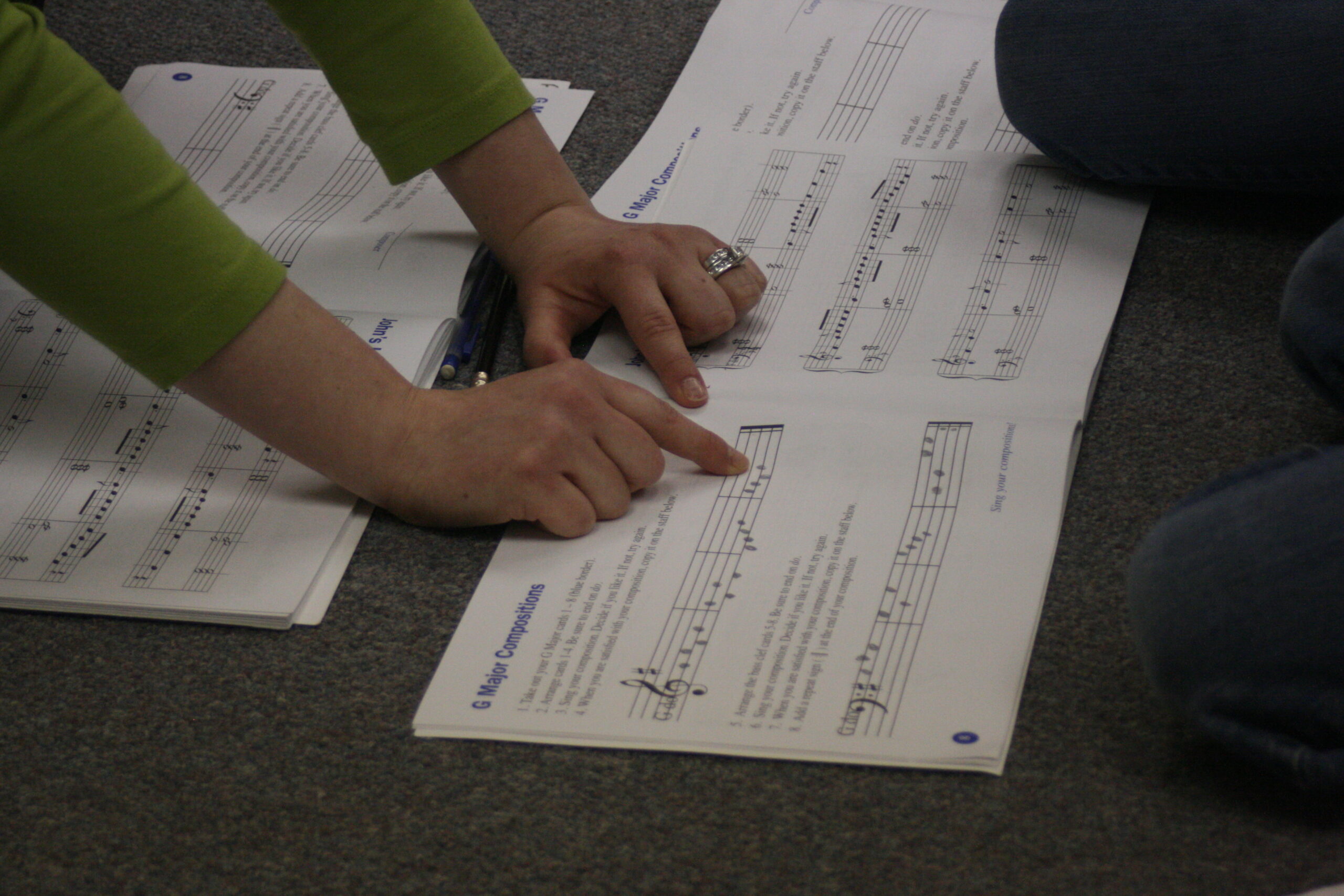
One of my students (7 years old) raced up to me to share when we met for class, “Look! I did this all by myself!” She had decoded the solfege in two piano pieces which then led her to figure out how to play them at home independently. I thought getting my students interested in analyzing music was going to take more effort than it did! but they actually answered questions with eagerness and enthusiasm. The analysis that these young musicians completed really impresses me; I know that many people who love and study music seriously do not even begin this type of processing until their collegiate years. Students in my Musikgarten Music Makers at the Keyboard class respond with excitement to their lessons; their learning flows in such an enjoyable manner!
Our MMK class focuses on literature that the students are highly motivated to sing: songs teach rhythmic exploration, solfege exploration, and general analysis, and the repertoire is taken from the American Folk Song Book Collection and Musikgarten Music Makers: At the Keyboard Year 1. This rich musical material is diverse in meaning, texture, mode, rhythm, and solfege.
Once the pieces are sung and played through many times on the piano, we focus on song analysis, to break down and understand rhythmic and solfege context. We asked ourselves questions like, “In which key is this piece written?” and “What do the lyrics in this piece describe?” and “Is this song in duple or triple meter?” The conversations that these questions produce, promote opportunities for students to use musical terminology more comfortability, making the “different” language of music, second nature.
After they complete an analysis and truly see and hear the meaning of each note, interval, pattern, and lyric in their repertoire list, I have noticed that students demonstrate more theoretical understanding and play with greater expressiveness. The ease with which they recognize solfege and rhythmic patterns, sets students up to learn additional Musikgarten literature (and solo piano music) much more quickly. Because they feel comfortable with major and minor tonalities and duple and triple meter, students also show more confidence as they turn to improvise and compose at the piano.
The Musikgarten MMK lessons provide an “aural approach to music learning, building on folk songs children have come to love. This provides a natural pathway to reading music while building a much-loved piano repertoire” (https://www.musikgarten.org/workshop-webinar/webinar-music-makers-at-the-keyboard-9-hour—book-1). Music Makers: At the Keyboard thoroughly trains six to nine year old children and sets a beautiful foundation for keyboard exploration and advancement. The students have an absolute blast with the piano, their voices, and with one another in this vivacious, musical environment!