
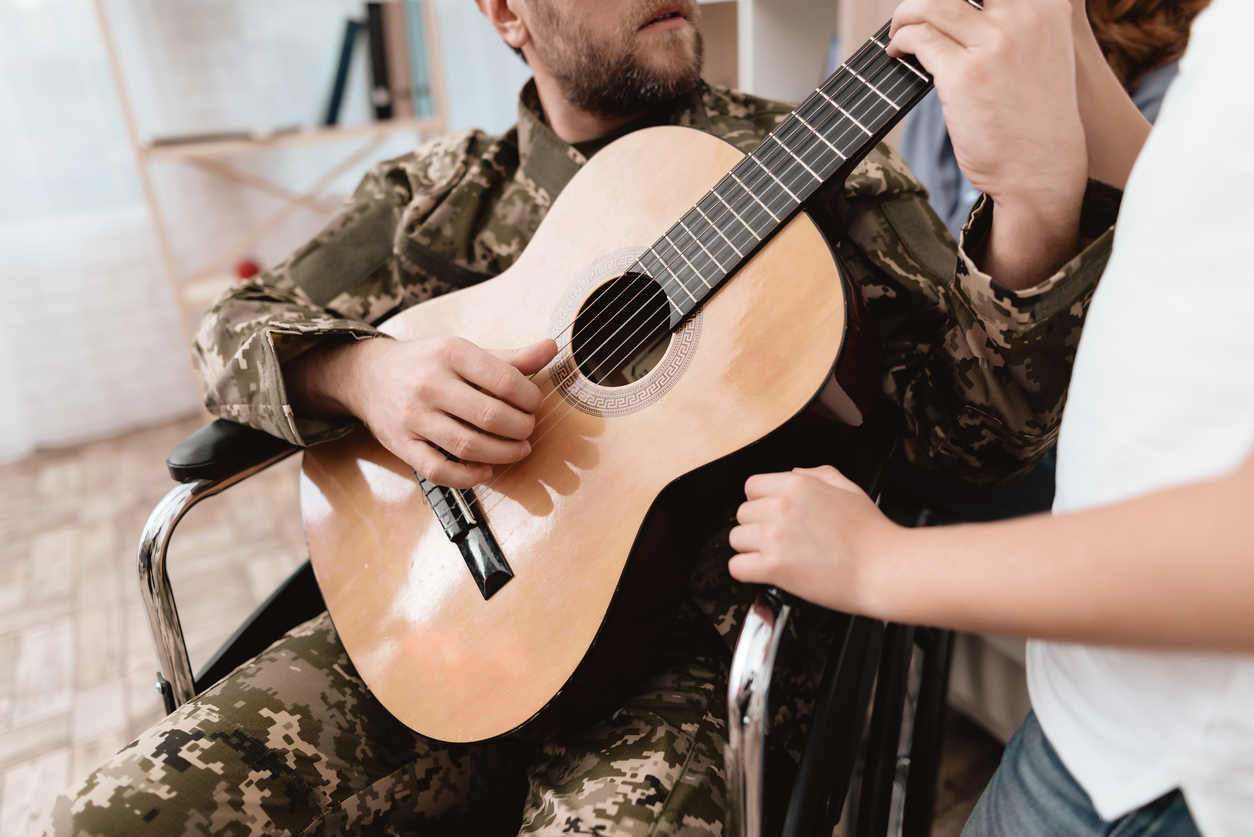
Veterans Understand First Hand
The brain is “wired” for music as we know, and so it is the perfect tool for promoting and accomplishing non-musical goals. Seldom do we meet a person who is not moved by music, even if we speak different verbal languages. Music can reach into the deep memory, coax one from isolative behaviors, and establish normative cognition and order through its tonal and rhythmic patterns. Music inspires movement, raising heart rates, expanding respiration, and igniting muscles.
A Music Therapist uses sound and movement to attain greater emotional, psychological, and physical capacities. The use of music can support improvement by extending a patient’s range of mobility. It can increase strength through repetition while listening to something motivating. Music helps people overcome anxiety, relieves tension, and increases joy. All of these assist overall healing.
Music has been used for centuries in all cultures throughout the world to advance good health. And music can be an essential part of a recovery plan for a person who might suffer a combinations of ailments – like those who have served in the military. The Music Therapist at the H. John Heinz lll Department of Veterans Affairs Medical Center in Fox Chapel says that the inter-generational experience of sharing music between young people and VA patients creates “connective tissue” that significantly adds to her patient’s sense of well-being.
If you have a piece that is concert-ready, we hope you will consider registering to play from home via Zoom for patients at the VA. CYM’s January Recital will be held on Sunday the 22nd, at 2:00 pm and broadcast to a community room full of eager listeners. Talk to your teacher about participating: we hope you will sign up to be part of this gesture of appreciation for those who volunteered when asked to take on difficult experiences.
Register here: CYM’s January Recital – thank you!